






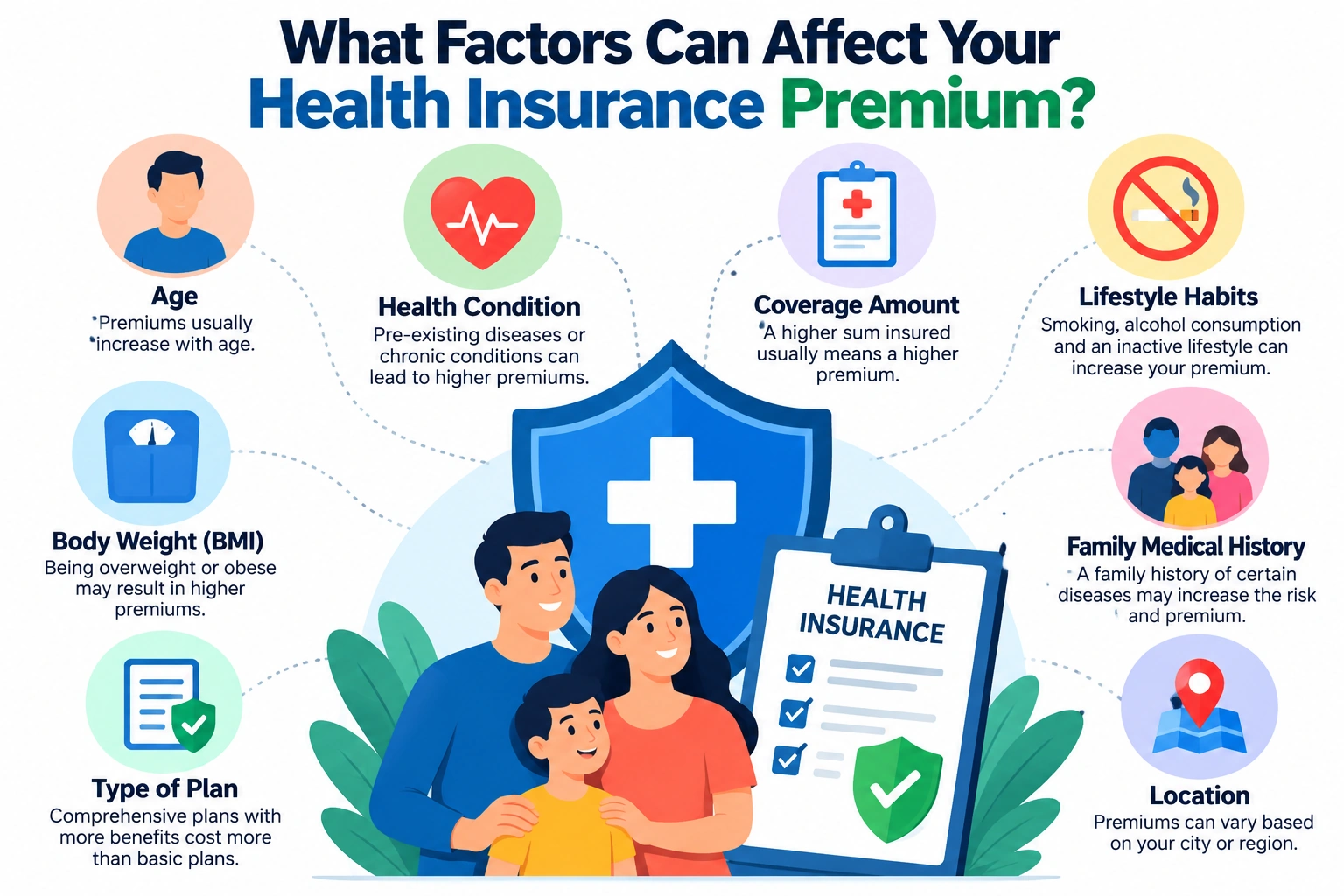
Health insurance can help protect your finances against the high cost of medical care. However, the premium you pay for coverage can vary significantly depending on several personal, policy-related, and insurer-specific factors. Understanding these factors can help you compare policies more effectively and choose coverage that fits your needs and budget. Age of the Policyholder […]
Health insurance can help protect your finances against the high cost of medical care. However, the premium you pay for coverage can vary significantly depending on several personal, policy-related, and insurer-specific factors. Understanding these factors can help you compare policies more effectively and choose coverage that fits your needs and budget.
Age of the Policyholder
Age is one of the factors commonly considered when determining health insurance premiums. Healthcare needs and the likelihood of medical treatment generally change with age, which can affect pricing.
Younger applicants may sometimes receive lower premiums than older applicants, although the actual amount depends on the insurer, policy structure, coverage level, and other factors.
Medical History
Your medical history can influence the cost of health insurance. Existing or previous medical conditions may affect underwriting and pricing depending on the type of policy and applicable regulations.
Some policies may include waiting periods for specific pre-existing conditions. It is important to disclose relevant medical information accurately when applying for coverage.
Providing incomplete or incorrect information can create complications when making a claim later.
Coverage Amount
The amount of coverage you choose can have a direct effect on your premium. A policy with a higher sum insured generally provides greater financial protection but may cost more.
When selecting coverage, consider potential healthcare costs, your family situation, location, age, and expected medical needs rather than choosing an amount based solely on the lowest premium.
Number of People Covered
Family health insurance policies may cover multiple members under one policy. Adding a spouse, children, parents, or other eligible family members can affect the overall premium.
The age and health profile of each insured person may also influence the cost, depending on the policy structure.
Location
Healthcare costs vary between cities and regions. Insurers may consider geographical factors when pricing policies because medical treatment costs can differ significantly between locations.
A policyholder living in an area with higher healthcare costs may therefore encounter different premiums from someone with similar characteristics in another location.
Policy Features and Benefits
The features included in a health insurance policy can influence its price. Benefits such as broader hospital networks, higher room-rent limits, maternity coverage, outpatient benefits, critical illness benefits, or additional services may affect the premium.
More benefits can provide greater protection, but it is important to determine whether you actually need them.
Deductibles and Co-Payments
A deductible is an amount you may need to pay toward eligible medical expenses before the insurer begins paying according to the policy terms.
A co-payment requires you to pay a specified portion of certain eligible expenses. Depending on the policy, choosing such cost-sharing arrangements may affect the premium.
However, a lower premium can mean greater out-of-pocket costs when you make a claim, so both sides should be considered.
Policy Duration and Renewal Terms
Some health insurance products may have different pricing structures based on their duration and renewal arrangements. It is important to understand whether premiums can change at renewal and what conditions apply.
Do not assume that today’s premium will necessarily remain unchanged throughout the life of a policy.
Lifestyle and Risk Factors
Depending on the policy and local insurance rules, certain lifestyle-related factors may be considered during underwriting. Smoking, tobacco use, and other risk factors can influence insurance costs in some circumstances.
Insurers may use information collected during the application and underwriting process to assess risk.
Claims History
Previous claims may be considered under certain insurance products and pricing structures. However, the impact varies by insurer, policy, jurisdiction, and type of coverage.
A claim should not automatically be avoided simply to protect a premium. Health insurance exists to provide financial protection when covered medical needs arise.
Policy Add-Ons
Optional riders or additional benefits can increase the total cost of coverage. Examples may include additional disease-specific benefits, maternity-related coverage, personal accident benefits, or other supplemental protections.
Before adding an optional benefit, review its coverage, exclusions, limits, waiting periods, and additional cost.
Compare More Than Just the Premium
The cheapest health insurance policy may not necessarily provide the protection you need. Compare the coverage amount, exclusions, waiting periods, deductibles, co-payments, room-rent restrictions, claim procedures, network hospitals, and renewal terms.
A slightly higher premium may provide more suitable coverage, while an inexpensive policy with significant limitations may not meet your needs.
Final Thoughts
Health insurance premiums are influenced by several factors, including age, medical history, coverage amount, number of insured people, location, policy benefits, cost-sharing arrangements, and optional features.
Before purchasing a policy, read the terms carefully and compare the overall value rather than focusing only on the premium. Understanding how pricing works can help you make a more informed decision and choose coverage that better matches your healthcare and financial needs.