





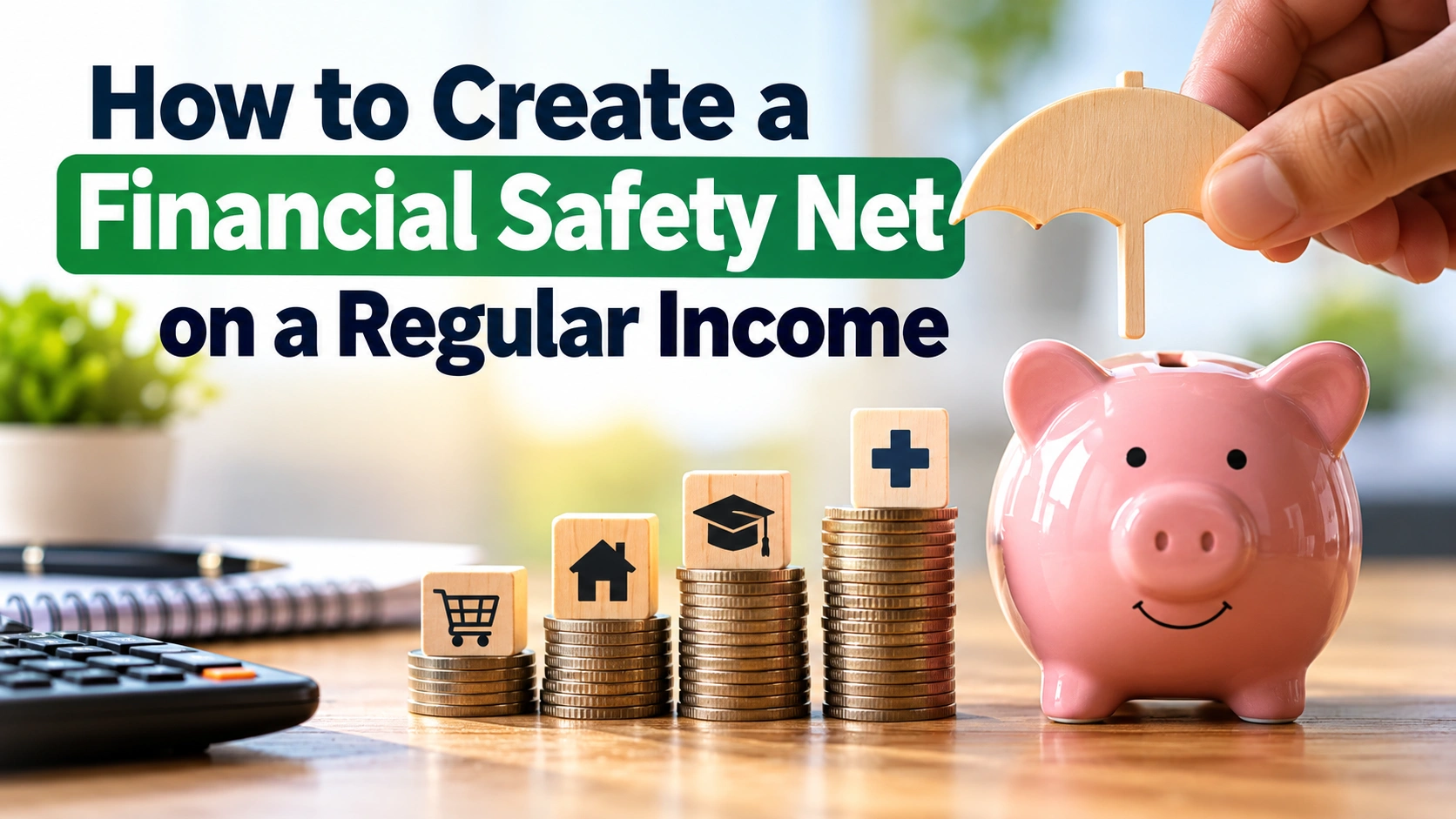
Financial emergencies can happen without warning. A medical bill, unexpected repair, temporary loss of income, or urgent family expense can quickly put pressure on a household budget. A financial safety net provides a cushion that can help you handle these situations without immediately relying on loans or credit cards. Building financial security does not necessarily […]
Financial emergencies can happen without warning. A medical bill, unexpected repair, temporary loss of income, or urgent family expense can quickly put pressure on a household budget. A financial safety net provides a cushion that can help you handle these situations without immediately relying on loans or credit cards.
Building financial security does not necessarily require a very high income. The key is to create manageable habits, prioritize essential expenses, and consistently set aside whatever amount is realistically affordable.
Start by Understanding Your Monthly Cash Flow
The first step is knowing where your money goes each month. List your regular income and essential expenses, including rent or housing costs, groceries, utilities, transportation, loan payments, insurance, and other recurring bills.
Then review variable spending such as entertainment, dining out, shopping, subscriptions, and online purchases. This gives you a clearer picture of how much money is available for savings.
A simple budget can make it easier to identify areas where small adjustments could create room for an emergency fund.
Build an Emergency Fund Gradually
An emergency fund is one of the most important parts of a financial safety net. Instead of trying to save a large amount immediately, start with a realistic monthly target.
For example, someone may begin by setting aside a small fixed amount after receiving their salary. As income increases or expenses decrease, the monthly contribution can gradually increase.
The long-term goal can be to build enough savings to cover several months of essential expenses, although the appropriate amount depends on employment stability, household responsibilities, and individual circumstances.
Automate Your Savings
Saving money becomes easier when it happens automatically. Consider arranging an automatic transfer from your primary account to a separate savings account shortly after receiving your income.
This approach reduces the temptation to spend the money first and save whatever remains at the end of the month.
Even a modest automated contribution can become meaningful when maintained consistently over time.
Keep Emergency Money Accessible
An emergency fund should generally be kept somewhere relatively accessible rather than in an investment that may fluctuate significantly in value or be difficult to access quickly.
The purpose of emergency savings is stability and availability. It is not necessarily to generate the highest possible return.
Keep the fund separate from your everyday spending account so that you can clearly distinguish emergency savings from money available for regular purchases.
Reduce High-Cost Debt
Debt with high interest rates can make it difficult to build financial security. If you have expensive outstanding debt, consider including debt repayment in your financial plan alongside saving.
The right balance between saving and debt repayment depends on the type of debt, interest rate, emergency savings available, and personal circumstances.
Maintaining at least some emergency savings can be useful so that a small unexpected expense does not immediately lead to additional borrowing.
Protect Yourself With Insurance
A financial safety net is not limited to cash savings. Appropriate insurance can also protect your finances against certain major expenses.
Depending on your circumstances, this could include health insurance, life insurance, vehicle insurance, or property-related coverage. Insurance needs vary, so coverage should be reviewed according to your household’s risks and financial responsibilities.
Plan for Irregular Expenses
Many expenses are predictable even though they do not occur every month. Annual insurance premiums, school expenses, vehicle servicing, festivals, home maintenance, and certain medical costs can all affect a yearly budget.
Instead of treating these expenses as emergencies, estimate their annual cost and set aside money throughout the year. This can prevent predictable bills from disrupting your monthly finances.
Increase Savings When Your Income Rises
When you receive a salary increase, bonus, freelance income, or other additional earnings, consider directing part of the increase toward savings rather than immediately increasing lifestyle spending.
This does not mean avoiding all enjoyment. The goal is to allow your financial security to grow alongside your income.
Review Your Safety Net Regularly
Your financial situation can change. A new job, marriage, child, loan, relocation, or major change in expenses may require adjustments to your savings target.
Review your budget and emergency fund periodically. Make sure the amount you have saved still makes sense based on your current essential expenses.
Final Thoughts
Creating a financial safety net on a regular income is mainly about consistency rather than making dramatic financial changes. A realistic budget, automatic savings, accessible emergency funds, appropriate insurance, and careful debt management can provide greater financial resilience.
You do not need to build the entire safety net at once. Starting with a manageable amount and gradually increasing your savings can help create a stronger financial foundation over time.